How to plan a focus session you can finish
Turn a vague task into a realistic focus session. Choose one outcome, prepare for distractions and leave a clear next step when you stop.
 By DAYFACTOR
You set a timer, open your laptop and spend the first ten minutes deciding where to begin. The session was reserved, but the task was still a blur. A little preparation can give that time a clearer purpose.
A workable focus session needs one outcome, a realistic boundary and a plan for the distractions that are likely to appear. You can use the same approach for studying, writing, household admin or a piece of work you have been putting off.
A FEW THINGS TO TAKE WITH YOU
- Define a visible result before starting the timer.
- Choose a length that fits the task and your available time.
- Leave a next-step note so returning takes less guesswork.
1. Name the result, not just the project
“Work on the presentation” leaves dozens of possible starting points. “Draft the three slides explaining the proposal” gives you a smaller piece to begin. A result can also be exploratory: list three possible approaches, read one section and write the questions it raises, or sort the documents you need.
Before you start, finish this sentence: “When this session ends, I want to have ___.” Choose something you can recognise even if the wider project remains unfinished. If you cannot name it yet, make defining the next step the purpose of a short planning session.
A more useful session brief
Project: Prepare for Friday’s meeting.
This session: Draft a one-page agenda with three decisions we need to make.
First action: Open the meeting notes and list the decisions.
2. Choose a time boundary you can keep
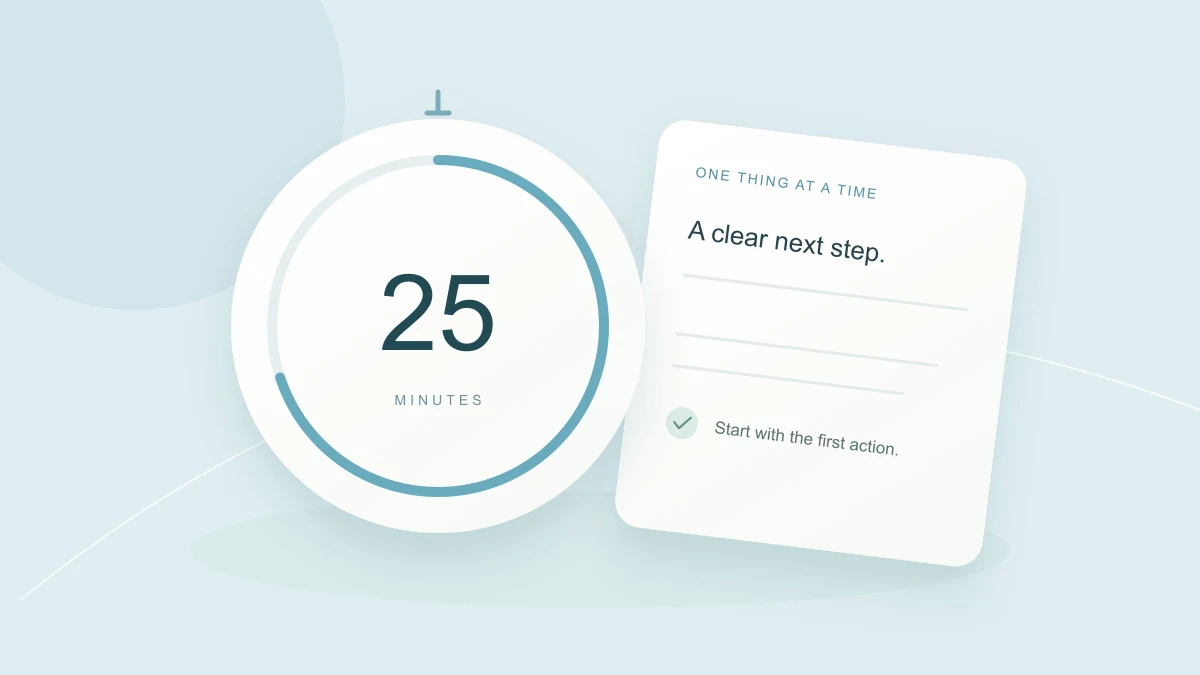
Look at the time actually available. A fifteen-minute window before an appointment calls for a different task from a quiet hour. You might start with 25 minutes and adjust after trying it, but no single interval is the right choice for every person or kind of work.
Leave space for the transition afterwards. If your next commitment starts at 11, a session ending at 10:55 gives you time to save your work and move on. The timer is a boundary that helps you make a decision about your attention; it is not a measure of how valuable the work was.
The University of North Carolina’s Learning Center recommends specific, realistic goals, manageable work periods with breaks, and ways to handle distractions. These are practical study strategies, rather than evidence that one timer length works best for everyone. UNC Learning Center — Distractions
3. Make the first action easy to reach
Open the document, gather the notes and close the tabs that belong to other tasks. If you can, put your phone somewhere it is less tempting to reach for it. Decide whether messages can wait until the session ends, taking account of anyone who genuinely needs to reach you.
A shared room or a busy home may never become perfectly quiet. Work with the space you have: choose the least disruptive place available, tell someone when you expect to be finished, or pick a task that suits the conditions. Preparation should help you begin, not become another project.
4. Give unrelated thoughts somewhere to wait
Keep a scrap of paper or a simple note beside the task. When you remember an unrelated email or errand, write a few words and return to the action in front of you. You can decide what to do with the note when the session ends.
This is a practical version of the distraction list suggested by UNC’s Learning Center. Keep it brief. If you open a full planning system for every thought, recording the distraction can turn into doing the distraction.
When an interruption cannot wait, take a moment to mark your place. Write what you were doing and the next concrete action, if circumstances allow. That leaves a visible route back even if you return much later.
Research by Sophie Leroy and Theresa Glomb found that a brief plan for returning to an interrupted task reduced attention residue and helped performance on the interrupting task under the conditions studied. A short return note is a practical adaptation of that idea, not a guarantee of uninterrupted attention. Leroy and Glomb, Organization Science
5. Stop with a clear handover to yourself
When the timer ends, compare the result with the session brief. Did you draft the agenda, discover a missing input or find that the task was larger than expected? Each gives you useful information for planning the next piece.
Save the work and leave one next action. “Continue tomorrow” still requires a decision. “Add the budget question beneath item two” is ready to use. Then take the break or make the transition you planned, instead of automatically extending every session.
A thirty-second closing note
Finished: Drafted the three agenda items.
Still open: Need the latest budget figure.
Next action: Ask for that figure, then add it beneath item two.
6. Adjust the next session using what happened
If you spent half the session finding materials, prepare them first next time. If you kept switching tasks, make the outcome narrower. If the time boundary felt unrealistic, choose a shorter session or a better window.
You do not need an impressive total to make progress. A focused piece of work with a clear ending can be a sensible plan for a busy day. Start by choosing one task, writing its first action and deciding when you will stop.
Sources & further reading
Written by DAYFACTOR. Research and public guidance are linked where used; examples and planning templates are our practical suggestions.