How to build a habit that fits your day
Build a realistic habit with a clear cue, a small starting action and a simple way to return after a missed day. A practical guide with examples.
 By DAYFACTOR
A new habit often starts with an ambitious version of an ordinary day: you wake up on time, nothing interrupts you, and there is plenty of energy left after work. The problem is that your habit also has to fit Tuesday, when the train is late and dinner still needs making.
Start by giving one useful action a clear place in the day you actually have. Choose when it happens, decide what counts as enough, and make returning straightforward. Here is a practical way to build that plan.
A FEW THINGS TO TAKE WITH YOU
- Attach one specific action to a familiar moment.
- Choose a version you can repeat on a busy day.
- Use your record to adjust the plan, not judge yourself.
1. Choose an action you can recognise
“Be more organised” is a direction. “Write tomorrow’s first task before closing my laptop” is an action. You can tell when it has happened, which makes both planning and tracking easier.
Pick something that matters to you now. If your aim is to read more, opening a book after lunch may be more useful than adopting someone else’s elaborate morning routine. Begin with one habit so you can see what helps it fit before adding more.
Make the action concrete
Instead of: Move more.
Try: After lunch, put on my shoes and walk to the end of the street.
Instead of: Get ready for tomorrow.
Try: Before I close my laptop, write down the first task for tomorrow.
2. Give it a cue that already exists
Look for a moment you already notice: finishing breakfast, arriving home or plugging in your phone for the evening. Then connect the new action to that moment. A cue is more useful when it is specific enough to recognise without negotiating with yourself.
If your schedule varies, an event may be easier to use than an exact time. “After my first meal” can still happen on a late shift. Keep the materials nearby too: a book on the table or walking shoes by the door makes the next action obvious.
In a study of everyday behaviours, repeating an action in a consistent context was associated with increasing self-reported automaticity. The study supports the value of a repeatable context; it does not give everyone the same deadline for forming a habit. Lally and colleagues, European Journal of Social Psychology
3. Decide what counts as enough
Write down a small starting version before the busy day arrives. Reading one page, setting out tomorrow’s clothes or taking a short walk gives you a clear completion point. Choose a version that fits your circumstances, so beginning does not depend on finding an ideal window.
You can do more when there is room. Keep the recorded habit clear, though. If the plan says one page, reading one page counts. Quietly raising the requirement every time you have a good day makes the original plan harder to trust.
- Starting version: Read one page after lunch.
- Optional extra: Continue for ten minutes if I want to.
- Busy-day preparation: Leave the book beside the place where I eat.
4. Track the action on the days you intend to do it
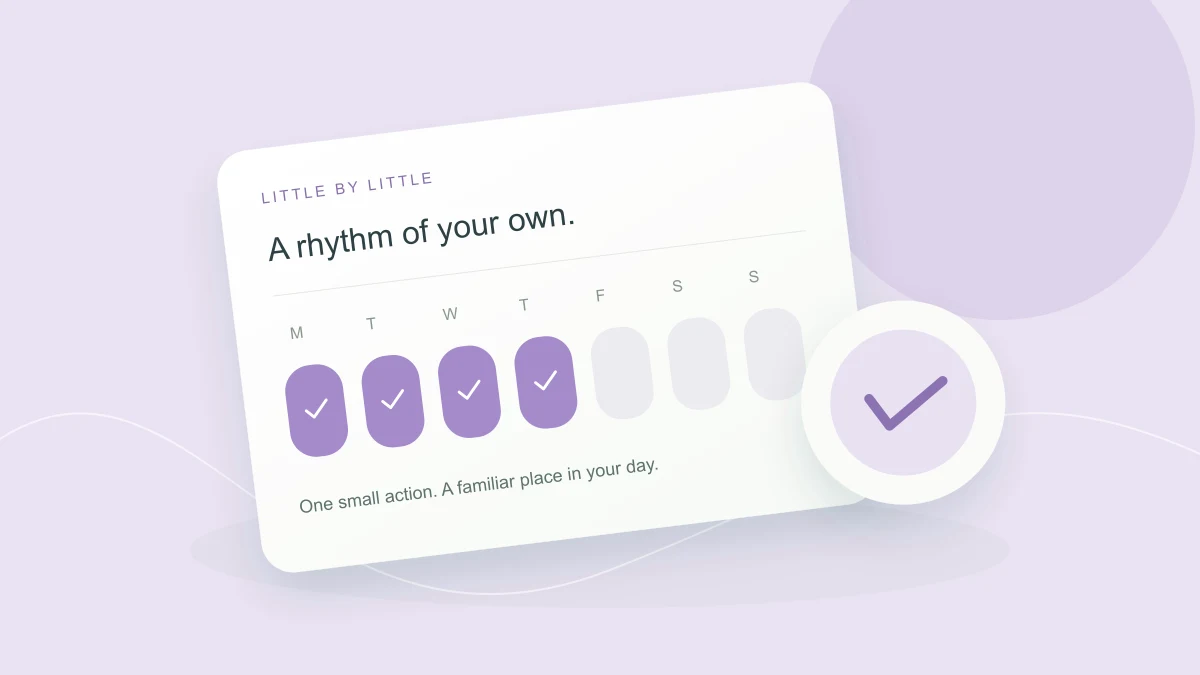
Choose a realistic schedule. A weekday habit and a daily habit are different plans; an unscheduled Saturday should not become an accidental failure. Record completion while you still remember what happened.
A tick can answer “Did I do the action?” It cannot explain the whole day. If the same difficulty keeps appearing, add a short note for yourself: the cue happened while commuting, the materials were elsewhere, or the evening was already full. That context gives you something practical to change.
Try to keep the record honest. Completing yesterday’s action today is a new action today. You do not need to rewrite the past to make returning worthwhile.
5. Make a return plan for the missed day
A missed day is a useful moment to ask what got in the way. Was the action too large? Did the cue disappear? Was this simply an unusual day? Change the part that caused friction, then use the next realistic opportunity.
There is no need to turn one missed action into a catch-up project. If you planned one page, return to one page.
In Lally and colleagues’ study, a single missed opportunity did not materially affect the habit-formation process. That finding is reassuring within that study, rather than a promise that every interruption has no effect. Lally and colleagues — Habit formation
6. Review the fit before increasing the goal
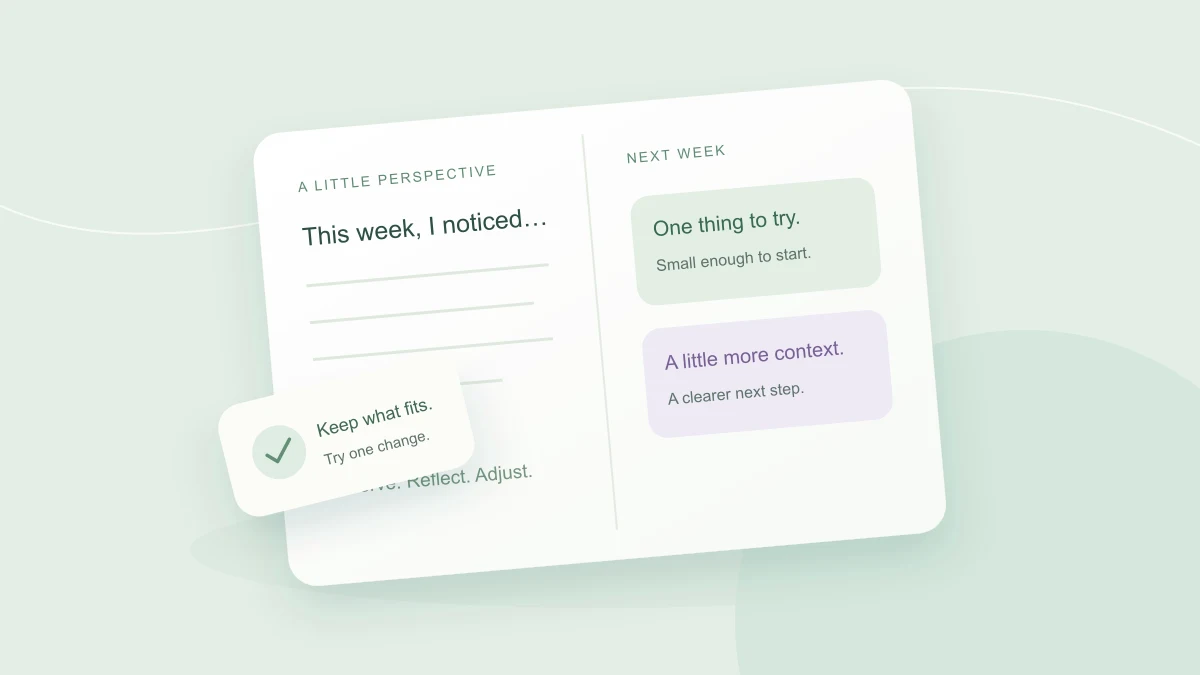
After a week, ask three questions: Was the cue easy to notice? Was the starting version realistic? Did the action feel useful enough to keep? Leave a plan alone when it is working. Adjust the time, place or size when it is not.
For example, if reading after lunch rarely fits because lunch happens at your desk, move the book to your bedside and test a different cue. You are improving the arrangement, rather than asking for more willpower from the same arrangement.
A useful next step is a one-sentence plan: “After ___, I will ___; on a busy day, ___ counts.” Keep it somewhere you will see it at the right moment. The next repetition can be small and still be worth doing.
Sources & further reading
Written by DAYFACTOR. Research and public guidance are linked where used; examples and planning templates are our practical suggestions.